

Why Timber Acoustics Is Building the World’s First Fully Wood-Centric Acoustic Brand
The Qualities of Wood That Make It Perfect for Musical Instruments & Room Acoustics
There is a reason the greatest musical instruments in history are made of wood.
Violins. Guitars. Pianos. Cellos. Concert grand soundboards. Even traditional Indian instruments like the tanpura and sitar.
Wood is not just a structural material.
It is an acoustic medium.
In an age where foam, plastic composites, and synthetic boards dominate acoustic treatment, wood remains the only natural material that has been trusted for centuries to shape, carry, and refine sound.
This article explores:
-
Why wood is ideal for musical instruments
-
The acoustic properties that make wood exceptional
-
How wood behaves in room acoustics
-
Why wooden diffusers outperform artificial materials
-
And how Timber Acoustics is pioneering a wood-first acoustic philosophy globally
Wood as a Living Acoustic Material
Unlike metal or plastic, wood is anisotropic. That means its physical properties vary along and across the grain.
In simple terms:
Sound travels differently through wood depending on direction.
This is precisely what makes it powerful for instruments and acoustic control.
Wood offers:
-
High strength-to-weight ratio
-
Natural resonance
-
Controlled internal damping
-
Harmonic richness
-
Micro-porosity that shapes reflections
It vibrates — but not chaotically.
It responds.
And that responsiveness is why luthiers obsess over tonewoods.
Why Wood Is Used in Musical Instruments
Let’s break this down scientifically.
1. Resonance with Control
Good instrument wood vibrates freely while controlling excessive ringing.
This balance creates sustain without harshness.
Spruce, maple, mahogany — each species shapes sound differently due to:
-
Density
-
Grain structure
-
Elastic modulus
-
Damping factor
A violin made of plastic cannot replicate the harmonic complexity of aged spruce.
Wood amplifies natural overtones while filtering unpleasant frequencies.
2. Natural Damping
Wood absorbs a small portion of energy internally.
That slight damping smooths sharp transients and reduces metallic harshness.
Instruments made of metal or carbon fiber often sound brighter but lack warmth.
Wood provides musicality.
3. Micro-Resonance & Harmonic Bloom
When a wooden guitar top vibrates, microscopic cellular structures influence how harmonics bloom.
That bloom — the “air” and “body” of sound — is what audiophiles chase.
Wood does not just project sound.
It shapes timbre.
How Wood Performs in Room Acoustics
Room acoustics and musical instruments share the same physics.
Sound waves interact with surfaces.
Wood interacts differently than concrete, glass, or foam.
1. Wood as a Diffusive Surface

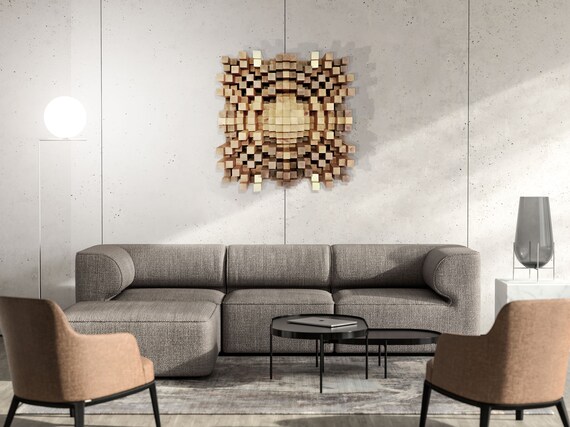
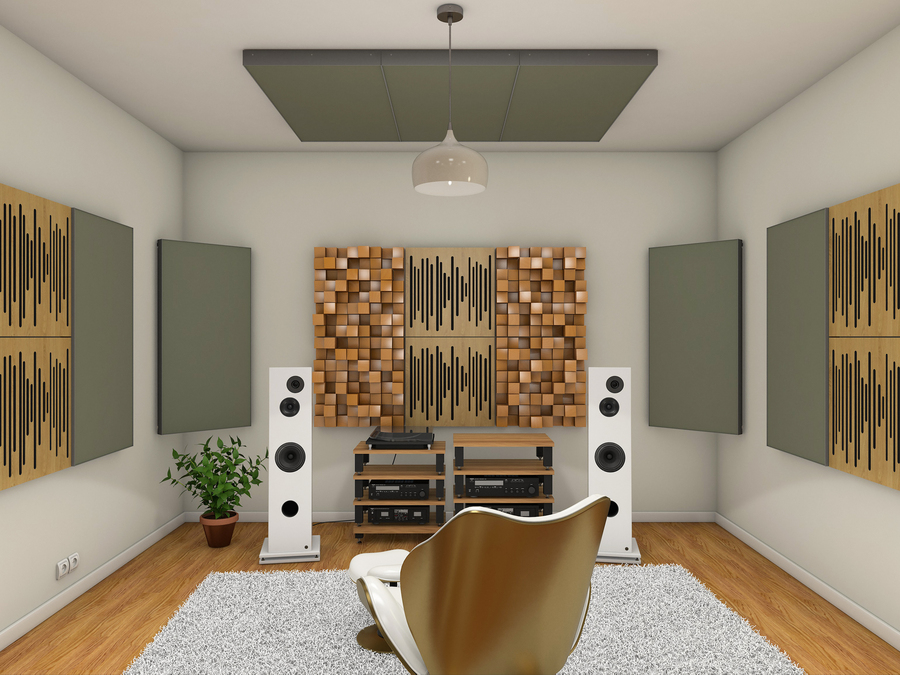
Wooden diffusers scatter sound instead of absorbing it.
Because wood is rigid and reflective yet textured, it breaks up reflections into smaller energy patterns.
This:
-
Expands soundstage
-
Preserves room energy
-
Reduces flutter echo
-
Maintains musical liveliness
Plastic diffusers scatter sound.
Wooden diffusers shape sound.
There is a difference.
2. Wood’s Balanced Reflectivity
Concrete reflects too harshly.
Foam absorbs too aggressively.
Wood sits in between.
It reflects in a controlled manner, slightly smoothing high frequencies due to surface grain and micro-porosity.
This creates warmth instead of glare.
That’s why concert halls worldwide incorporate extensive wood paneling.
3. Aesthetic & Psychological Impact
Acoustics are not just measured in RT60 values.
They are felt.
Wood brings:
-
Warmth
-
Natural grain variation
-
Organic texture
-
Visual depth
In listening rooms, studios, and auditoriums, wooden acoustic elements elevate emotional connection.
Sound is experienced differently in natural environments.
Foam vs Wood: A Philosophical Divide
Foam:
-
Petrochemical-based
-
Short lifespan
-
Absorbs only high frequencies
-
Visually temporary
-
Structurally weak
Wood:
-
Renewable
-
Durable
-
Architecturally integrated
-
Capable of diffusion & hybrid absorption
-
Timeless
Foam solves echo.
Wood refines sound.
Wooden Diffusers for Hi-Fi & Studio Spaces
Audiophiles increasingly demand:
-
Handcrafted wooden skyline diffusers
-
Quadratic residue diffusers
-
Slatted wood absorptive hybrids
-
CNC-precision carved panels
Wood enables depth variation necessary for effective diffusion.
Because diffusion depends on physical geometry, wood’s machinability makes it ideal.
Metal can do it.
Plastic can do it.
But neither offers the warmth and resonance signature of hardwood.
Wood in Commercial Acoustic Projects
In auditoriums and prayer halls, wooden acoustic elements provide:
-
Controlled reflection
-
Speech clarity enhancement
-
Diffusion on rear walls
-
Elegant architectural finish
Large halls that incorporate wood often feel balanced even before electronic amplification.
Wood distributes sound naturally.
Timber Acoustics: A Wood-First Acoustic Philosophy
While most acoustic brands globally rely on:
-
MDF wrapped in fabric
-
Foam tiles
-
Synthetic PET boards
-
Plastic diffusers
Timber Acoustics is built differently.
The brand philosophy is simple:
Sound deserves natural materials.
Timber Acoustics integrates:
-
Solid wood diffusers
-
Engineered hardwood slat absorbers
-
CNC precision skyline systems
-
Wood-framed broadband panels
-
Architectural acoustic installations centered around timber
It is not decoration.
It is acoustic craftsmanship.
Why Timber Acoustics Stands Alone
Most global brands treat wood as aesthetic trim.
Timber Acoustics treats wood as the acoustic foundation.
From hi-fi listening rooms to commercial halls, the focus remains:
-
Resonance
-
Diffusion geometry
-
Grain orientation
-
Sustainable sourcing
-
Premium finish
In an industry dominated by synthetic solutions, Timber Acoustics positions itself as the only brand entirely built around wood as the central acoustic material philosophy.
Wood is not an accessory.
It is the identity.
The Future of Acoustic Design Is Natural
As audiophiles and architects move toward:
-
Sustainable interiors
-
Biophilic design
-
Premium craftsmanship
-
Architectural integration
Wood becomes more relevant than ever.
Rooms that feel natural sound natural.
And natural sound is what musicians and listeners crave.
Final Thoughts
From Stradivari violins to modern high-end listening rooms, wood has always been at the center of great sound.
Its:
-
Resonant balance
-
Controlled damping
-
Diffusive capability
-
Visual warmth
-
Longevity
make it unmatched.
In a world of foam and synthetics, Timber Acoustics is championing a return to timber — positioning itself as the only acoustic brand globally committed to a wood-first identity.
Because sound is organic.
And it deserves an organic medium.
Wood is not just material.
It is music’s oldest partner.