

Acoustic Treatment for Auditorium & Prayer Hall Acoustics in India
Share
Acoustic Treatment for Auditorium & Prayer Hall Acoustics in India
A Practical Guide for Institutions, Architects & Government Projects
Large halls look impressive. But acoustically? They’re usually a disaster.
If you’ve ever walked into an auditorium or prayer hall and heard your own voice bounce back at you — that’s excessive reverberation. Speech becomes unclear. Sermons lose impact. Announcements feel chaotic.
This guide explains acoustic treatment for auditorium spaces, especially focused on prayer hall acoustics in India, commercial buildings, and institutional projects. We’ll cover RT60 in simple terms, wall coverage calculations, material comparisons, and real-world costing.
Why Large Halls Have Echo Problems
Auditoriums, prayer halls, school multipurpose halls and community spaces typically have:
-
High ceilings
-
Marble / granite floors
-
Plastered concrete walls
-
Glass windows
-
Minimal soft furnishings
All hard surfaces. All reflective.
Result?
Excessive echo, low speech clarity, listener fatigue.
To achieve proper echo reduction for large halls, treatment must be planned — not randomly installed.
Understanding RT60 (Simplified)
RT60 is the time it takes for sound to decay by 60 dB after the source stops.
In simple terms:
-
Clap in a hall.
-
How long does the sound linger?
That lingering time is reverberation.
Ideal RT60 Targets
| Space Type | Ideal RT60 |
|---|---|
| Speech-heavy prayer hall | 0.8 – 1.2 seconds |
| Auditorium (speech + music) | 1.2 – 1.8 seconds |
| Multipurpose institutional hall | 1.0 – 1.5 seconds |
Most untreated Indian halls sit at 2.5 to 4+ seconds.
That’s why speech intelligibility drops drastically.
Proper speech intelligibility improvement requires reducing RT60 using absorption and diffusion.
How Much Wall Coverage Is Needed?
A common misconception: “Let’s just cover one wall.”
For large halls, effective treatment usually requires:
-
25% to 40% total surface area coverage
-
Focus on upper wall zones (above 7–8 ft)
-
Rear wall absorption
-
Ceiling treatment if height exceeds 12 ft
Example Calculation
If a prayer hall has:
-
5,000 sqft wall + ceiling surface area
Treatment required:
-
Approx. 1,250 – 2,000 sqft of acoustic material
Exact percentage depends on:
-
Ceiling height
-
Floor material
-
Occupancy load
-
Existing furnishings
This is where professional acoustic consultancy in India becomes essential.
PET Panels vs Rockwool Panels (What Works Where?)
1. PET Acoustic Panels


Best for:
-
Large wall coverage
-
Aesthetic integration
-
Budget-sensitive institutions
-
Government schools
Advantages:
-
Lightweight
-
Easy installation
-
Good mid-high frequency absorption
-
Fire-retardant variants available
Limitation:
-
Less effective in controlling low-frequency reverberation in very large volumes
2. Rockwool / Mineral Wool Panels
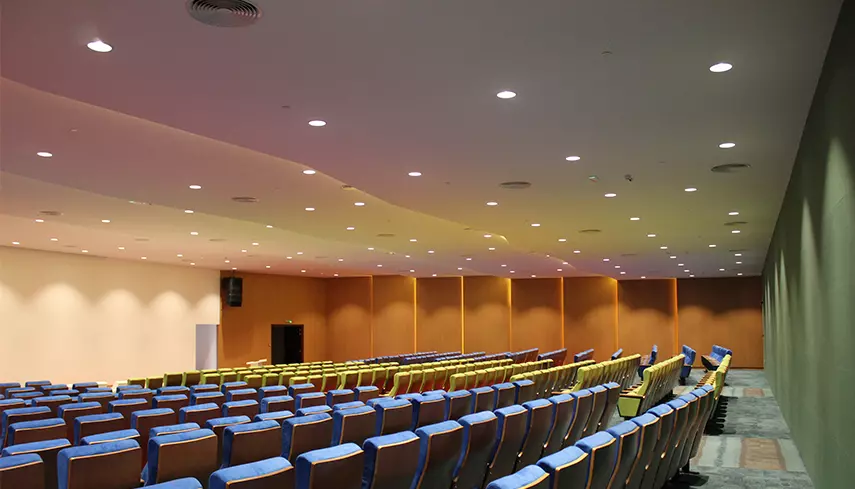

Best for:
-
Speech clarity
-
Stronger absorption across frequency range
-
Stage back walls
-
High-impact zones
Advantages:
-
Higher NRC
-
Better broadband performance
-
Suitable for premium auditoriums
For serious commercial acoustic panels in India, mineral wool core systems outperform thin decorative panels.
Timber Acoustics designs both PET and high-performance rockwool systems depending on project goals.
Ceiling Baffles – Critical in Tall Halls
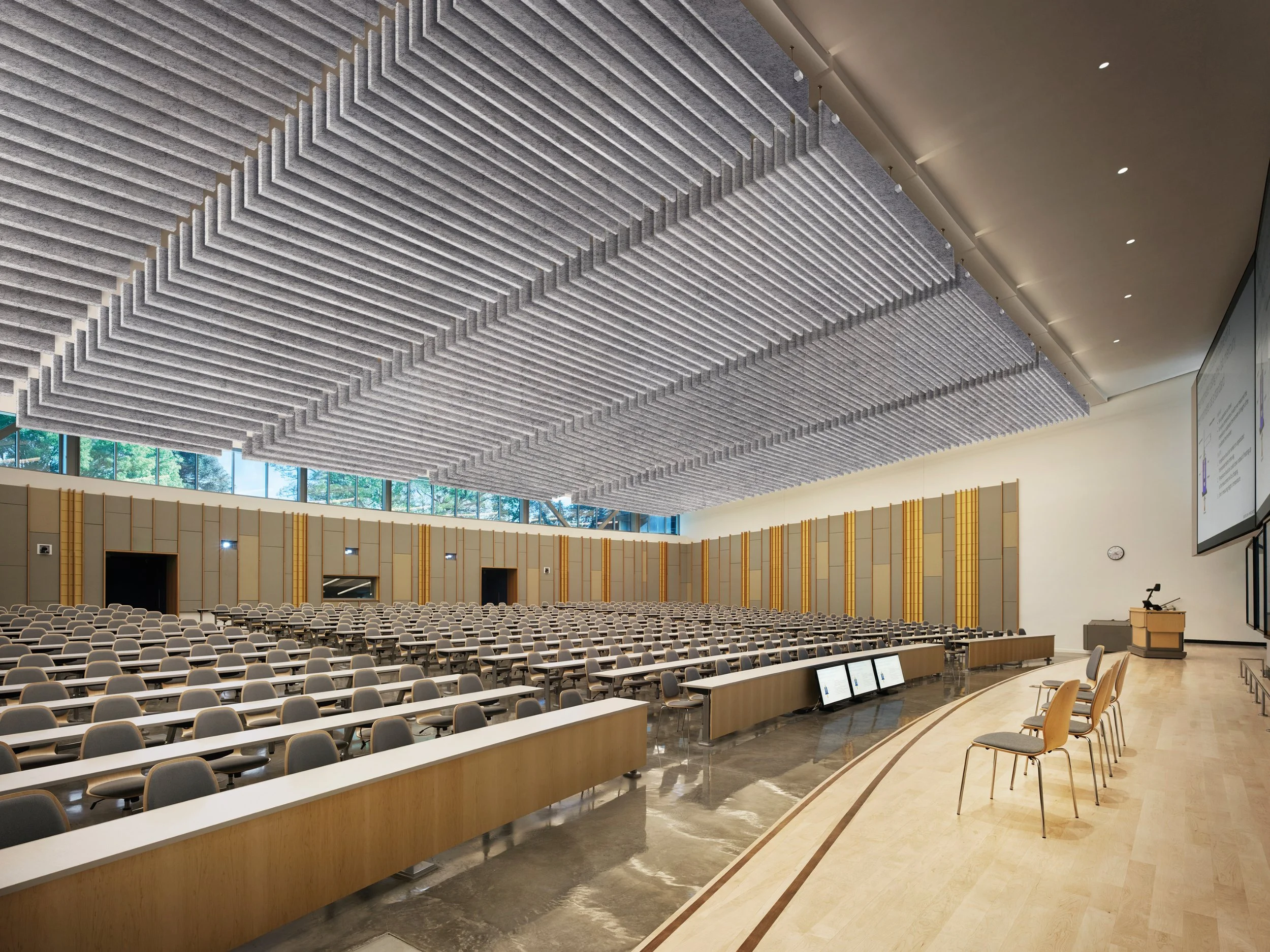


When ceiling height exceeds 15–20 ft, wall panels alone are not enough.
Ceiling baffles:
-
Break vertical reflections
-
Reduce RT60 faster
-
Improve clarity at back seating rows
-
Maintain architectural openness
They’re especially useful in:
-
University halls
-
Prayer halls
-
Government auditoriums
-
Multipurpose community centers
Acoustic Curtains for Prayer Halls

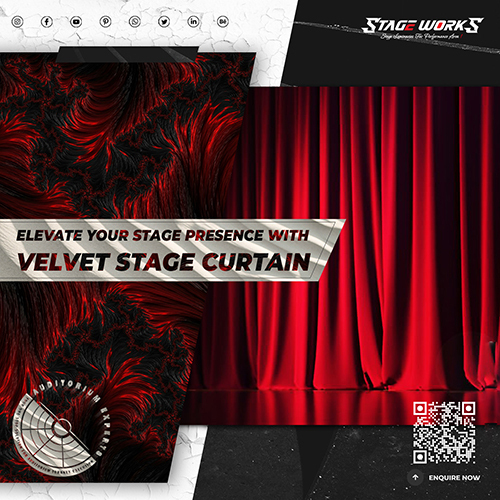

Acoustic curtains help:
-
Reduce stage reflections
-
Improve microphone clarity
-
Control flutter echo
-
Provide flexible treatment (open/close system)
Heavy, layered velvet acoustic curtains with dense backing are highly effective for stage zones.
They are particularly useful in Indian religious spaces where stage décor is common.
Case Study Format – Example: University Prayer Hall (Punjab)
Project Type: Large prayer hall
Area: 7,000 sqft
Ceiling Height: 22 ft
Issue: Severe echo, unclear speech beyond first 5 rows
Acoustic Problems Identified:
-
RT60 measured ~3.4 seconds
-
Marble flooring
-
Bare concrete walls
-
No ceiling absorption
Solution Provided:
-
1,800 sqft PET wall panels (upper wall zones)
-
600 sqft rockwool panels at rear wall
-
900 sqft ceiling baffles
-
Stage acoustic curtains
Result:
-
RT60 reduced to 1.2 seconds
-
Speech Transmission Index improved significantly
-
Clear intelligibility across seating
This is the level of structured planning required for institutional spaces.
Estimated Acoustic Treatment Cost per Sqft in India
Costs vary by material and scale.
| Treatment Type | Approx. Cost per Sqft (India) |
|---|---|
| PET Panels | ₹120 – ₹250 |
| Rockwool Fabric Panels | ₹250 – ₹450 |
| Ceiling Baffles | ₹300 – ₹600 |
| Acoustic Curtains | ₹350 – ₹700 |
Large government projects benefit from scale efficiencies.
Premium engineered systems (custom finishes, branding, fire compliance) fall on higher side.
Government & Institutional Projects in India
Acoustic treatment is now standard in:
-
Smart City projects
-
Government schools & colleges
-
Auditoriums under CSR programs
-
Religious institutions
-
Convention centers
-
Municipal halls
Procurement typically requires:
-
Fire-retardant certification
-
GST compliance
-
Vendor registration
-
Structured BOQ
-
Acoustic performance documentation
Timber Acoustics operates as a premium commercial acoustic partner in India, offering:
-
Acoustic consultancy
-
RT60 estimation
-
BOQ preparation
-
Site execution
-
Custom aesthetic finishes
-
Institutional compliance support
Why Professional Acoustic Consultancy Matters
Large halls are not DIY projects.
Without calculations:
-
Panels may be under-installed
-
Budget may be wasted
-
RT60 may remain high
-
Speech clarity may still suffer
A structured acoustic treatment for auditorium approach includes:
-
Site measurement
-
Surface area calculation
-
RT60 simulation
-
Material recommendation
-
Installation zoning
-
Post-installation review
That’s how speech intelligibility improves consistently.
Frequently Asked Questions (FAQ Schema Ready)
What is the ideal RT60 for a prayer hall in India?
Ideal RT60 for speech-heavy prayer halls is between 0.8 and 1.2 seconds.
How much acoustic panel coverage does an auditorium need?
Typically 25%–40% of total surface area, depending on hall volume and materials.
Are PET panels sufficient for large halls?
PET panels work well for mid-high frequency control. For better broadband absorption, rockwool panels are recommended in key zones.
What is the cost of acoustic treatment per sqft in India?
It ranges from ₹120 to ₹700 per sqft depending on material and design complexity.
Do acoustic curtains really reduce echo?
Yes, especially around stage areas. Heavy layered curtains help reduce reflections and improve speech clarity.
Can acoustic treatment be done in existing government halls?
Yes. Retrofit projects are common and can be executed without major civil modifications.
Final Thoughts
Large halls should inspire clarity — not chaos.
Whether it’s a government auditorium, institutional hall, university prayer space, or commercial venue, proper acoustic treatment transforms the experience.
Better speech intelligibility.
Reduced echo.
Clear communication.
Timber Acoustics positions itself as a premium commercial acoustic partner in India — combining engineering, aesthetics, and institutional execution capability.
If you’re planning an auditorium or prayer hall project, consult before you install.
Because in large spaces, sound control is not optional.
It’s structural.